Image-Guided Care: Veterinary Interventional Radiology in Salt Lake City, UT
When a pet has a complex urinary, airway, vascular, or liver-related condition, treatment does not always have to rely on traditional open surgery. Wasatch Animal Group offers veterinary interventional radiology, using advanced imaging to guide precise procedures inside the body.
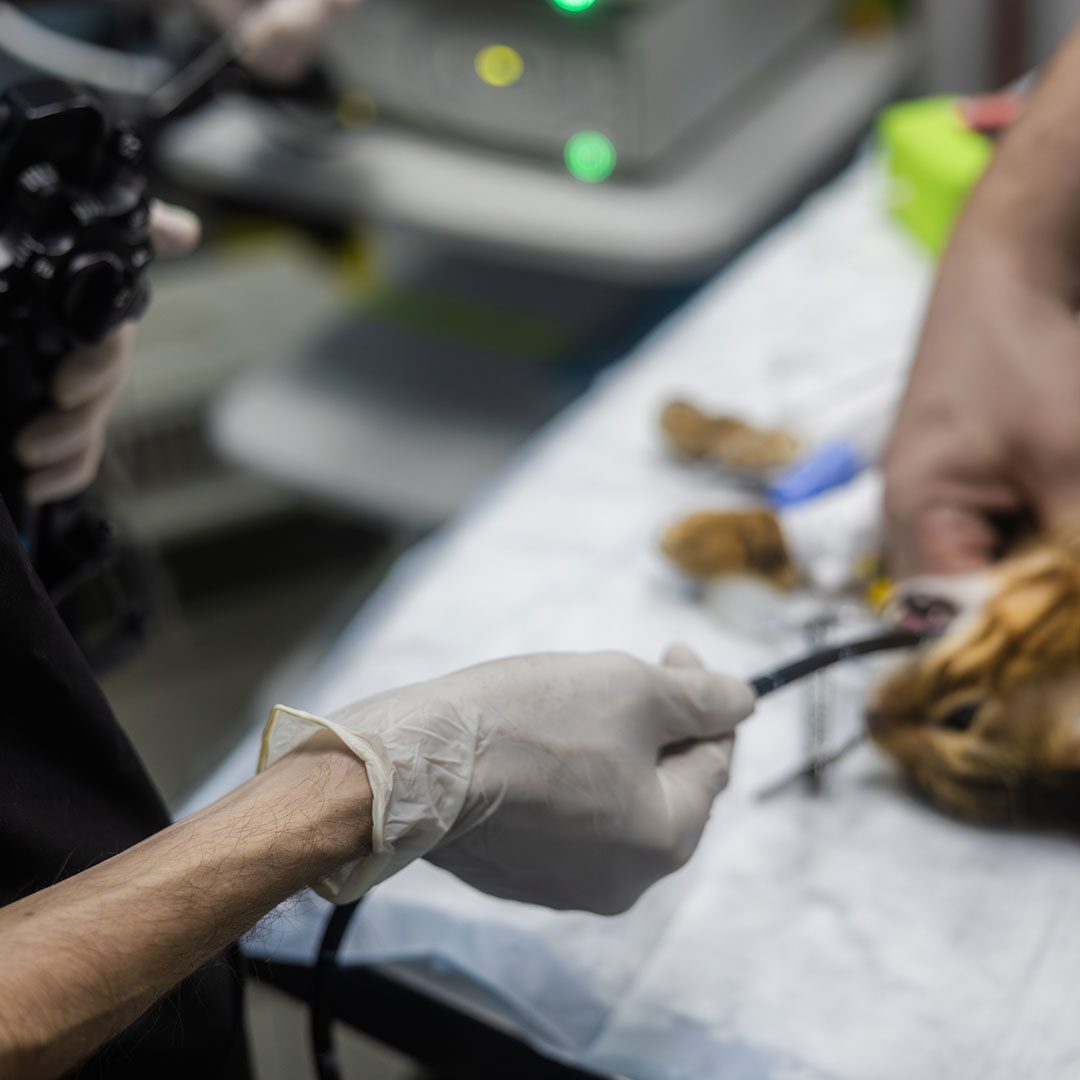
Interventional radiology allows our team in Salt Lake City, UT to reach specific areas through small access points, often using fluoroscopy, endoscopy, ultrasound, or other imaging tools to guide treatment in real time. For the right patient, this approach may reduce surgical trauma, improve access to hard-to-reach areas, and create options when standard treatment is limited.
If your pet has been referred for an advanced urinary, airway, or liver-related procedure, contact WAG to schedule a consultation or referral review.
What Is Veterinary Interventional Radiology?
Veterinary interventional radiology uses imaging guidance to diagnose or treat certain conditions without the same approach as traditional open surgery. These procedures often involve small instruments, catheters, scopes, stents, or implants placed with the help of real-time imaging.
This field can be especially helpful for conditions involving narrow passages, blocked tubes, abnormal blood flow, or structures that are difficult to reach safely through routine surgery.
Interventional radiology may be used to help pets with:
-
Ureteral obstruction
-
Urethral obstruction or narrowing
-
Tracheal collapse or airway narrowing
-
Certain liver shunts
-
Urinary stones
-
Ectopic ureters
-
Swallowing or airway function concerns
-
Conditions that need image-guided sampling or treatment
What Interventional Radiology Services Does WAG Offer?
Interventional radiology gives our team advanced ways to diagnose and treat certain conditions using image-guided techniques. Some of the most common procedures we perform include:
-
Subcutaneous Ureteral Bypass:
Helps urine move from the kidney to the bladder when the ureter is blocked, often due to stones or strictures.
-
Intrahepatic Shunt Embolization:
Uses image guidance to help manage certain liver shunts located within the liver.
-
Ureteral and Urethral Stenting:
Helps keep narrowed or obstructed urinary passages open so urine can flow more normally.
-
Tracheal Stenting:
Supports airflow in select pets with severe tracheal collapse or airway narrowing.
-
Laser Lithotripsy:
Breaks certain urinary stones into smaller pieces so they can be removed or passed more easily.
-
Laser Ablation of Ectopic Ureters:
Treats abnormal urinary connections that may cause urine leakage, especially in young dogs.
-
Diagnostic Fluoroscopy:
Provides real-time moving X-ray images to evaluate swallowing, airway motion, and other dynamic concerns.
-
Ultrasound-Guided Biopsy:
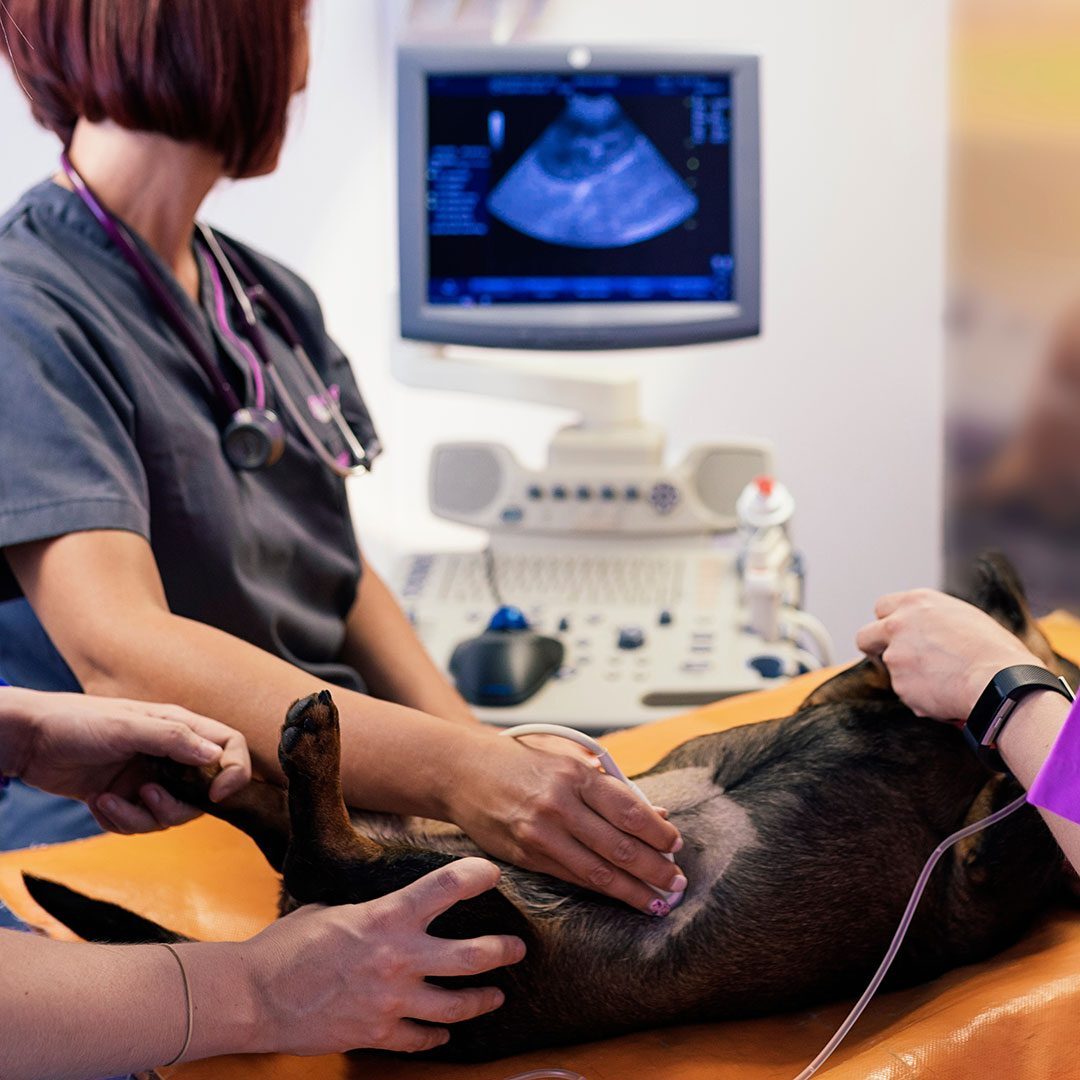
Uses imaging to guide sample collection from certain organs, tissues, or masses for diagnosis.
How Is Interventional Radiology Different From Traditional Surgery?
Traditional surgery often involves directly opening an area of the body to repair, remove, or access a problem. Interventional radiology uses imaging guidance to reach or treat certain conditions through smaller access points.
For some pets, that may mean:
-
Smaller incisions or access sites
-
Less disruption to surrounding tissue
-
Faster recovery in select cases
-
Access to areas that are difficult to reach surgically
-
More options for pets with complex conditions
-
Shorter hospital stays, depending on the procedure and patient
Interventional radiology is not always a replacement for surgery. Some pets still need open surgical care, emergency stabilization, or a combined approach. WAG’s team will explain which option best fits your pet’s condition.

If your pet has been referred for an interventional radiology procedure, contact WAG today.